Desk Relief Studio
Why Sitting Hurts Isn't What You Think
Discover how prolonged sitting gradually changes the body and learn practical strategies from the Adaptive Body framework to move better, feel better, and reduce everyday pain.
Over 20 years of clinical experience distilled into a practical framework for desk workers.
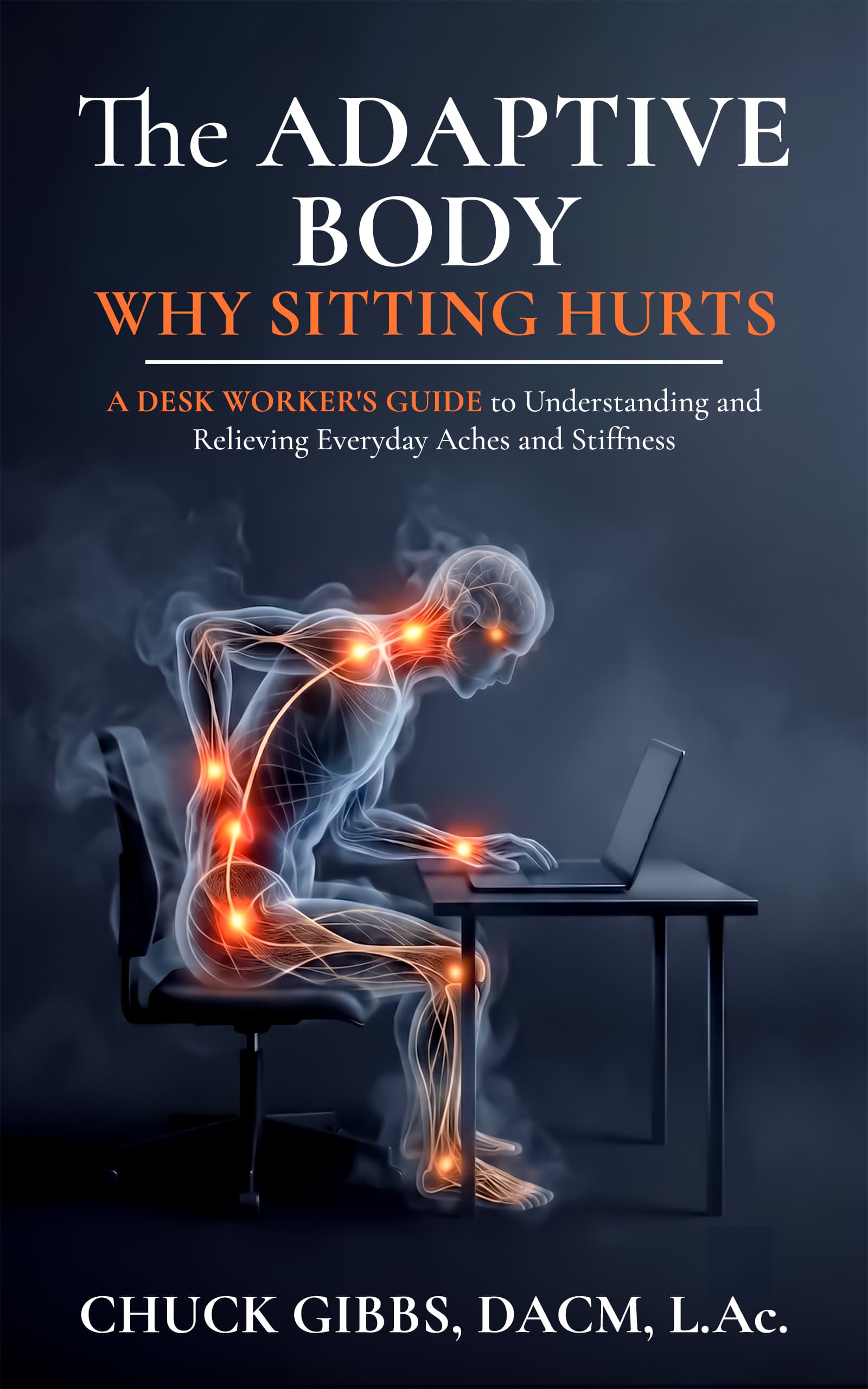
Free Companion Guide
Download the free Companion Guide that accompanies The Adaptive Body: Why Sitting Hurts.
Explore each stage of the Adaptive Body Ladder through practical explanations, self-assessments, workstation guidance, and simple strategies designed to help you recognize how prolonged sitting gradually shapes the body.
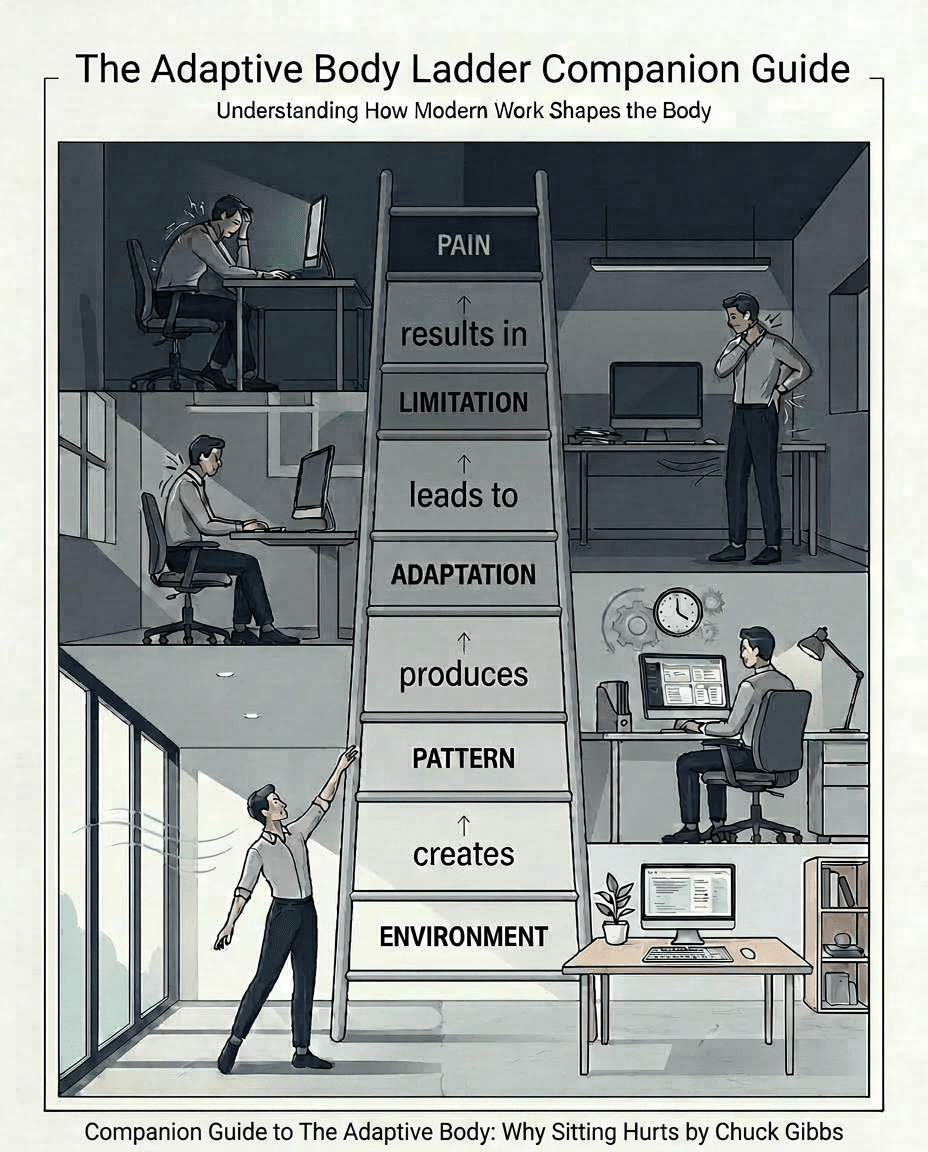
The Adaptive Body Ladder
Pain rarely appears overnight.
Small changes accumulate over time.
The Adaptive Body Ladder illustrates how everyday habits gradually influence movement, tissue health, and ultimately pain.
Understanding the ladder helps you recognize problems earlier, before small changes become lasting limitations or chronic pain.
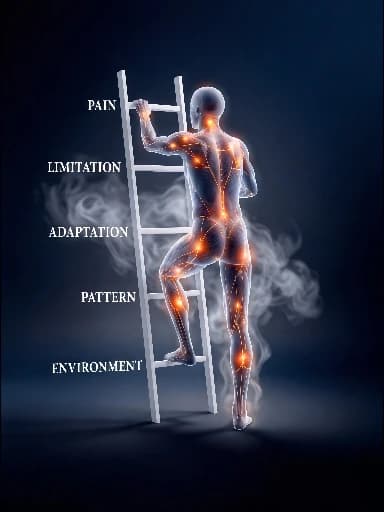
1Environment
Your environment influences how your body moves throughout the day.
2Pattern
The positions you repeat become your body's normal.
3Adaptation
Your body adapts to repeated demands whether those demands are helpful or harmful.
4Limitation
Over time, adaptation reduces movement options and creates functional limitations.
5Pain
Pain often appears as the final stage, not the first.
The Foundation Book
The Adaptive Body: Why Sitting Hurts
The Adaptive Body: Why Sitting Hurts introduces a new framework for understanding why prolonged sitting contributes to pain and movement limitations.
Rather than focusing only on ergonomics, the book explains how the body progressively adapts to repeated positions and how those adaptations can be reversed through intentional movement.
Whether you experience neck pain, back pain, hip stiffness, or general discomfort, the Adaptive Body framework provides practical strategies for improving long-term movement health.

Meet the Author
Chuck Gibbs, DACM, L.Ac.
Chuck Gibbs is a licensed acupuncturist with more than twenty years of clinical experience helping patients overcome pain and restore movement. Drawing from biomechanics, fascia research, rehabilitation principles, and traditional East Asian medicine, he developed the Adaptive Body framework to explain why everyday movement habits matter, and how small changes can create lasting improvements.